Showing posts with label class. Show all posts

Friday, August 14, 2009

More Second Gilded Age Blogging

My world has been full of language labs, cat doors, hiking, assessment, fence building and course prep recently and I've neglected to blog about much. Meanwhile, we keep bailing out the upper 6%. The average income of this 6%? Over 30 million dollars per year. On a global scale, 300 or so individuals are worth more as a group than the bottom 2.5 billion (Harvey, A Brief history of neoliberalism). What irks me is that this is an absolutely radical transformation from 40 years ago, yet we act (see Forbes, Bush, Palin, McCain, Norquist, Newt, Armey, John Roberts, Scalia, Goldman Sachs, etc.) as if these folks are under some kind of burden, held back by meddlesome government and jealous commoners. Right.


Anyway, as always, Brad Delong gets it right, channeling Krugman quoting Saez...

More Second Gilded Age Blogging: "

Via Paul Krugman:

Even more gilded: With everything else going on, the latest inequality numbers from Emmanuel Saez, now updated to 2007, didn’t get much attention. But they’re truly amazing:

Even more gilded - Paul Krugman Blog - NYTimes.com.gif

That means that the top 1-10,000 of the American income distribution receives 6% of pretax household income--meaning that their average income is 600 times that of the average.


Time for a more progressive income taz, is what I am saying...


The curious thing is that Emmanuel's office is only 7 doors north down the hall, yet I have to find out about this via a loop to New Jersey...


"

Thursday, February 26, 2009

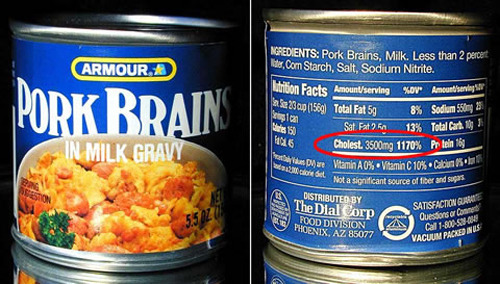
Pork Brains

http://thisiswhyyourefat.com/post/81700285/pork-brains-in-milk-gravy

Thursday, July 17, 2008

Zirin does it again.

Thank you David Zirin.  It's rare that I post links almost entirely, but you say it all:

Zirin:
Let's start with an email I received this morning from Kap Fulton:

"Who are Justin, Josh, Lance, Ryan, Dan, Grady, Chase, and Evan?

A. Roll call for a second grade class in at a suburban Ohio elementary school
B. The most popular boys names in Denver, CO
C. Characters from the new 90210
D. Bud Selig's attempt at diversity: one Canadian."

If you answered D, take a bow. Yes, Justin Morneau, (the Canadian), Josh Hamilton, Lance Berkman, Ryan Braun, Dan Uggla, Grady Sizemore, Chase Utley, and Evan Longoria were the contestants in this year's Home Run Derby on the eve of the 2008 All Star Game, and it was quite the Caucasian ovation (although, as I've learned since posting this column, Grady Sizemore's father is African American). Granted, the big time rainbow coalition of home run boppers like David Ortiz, Alex Rodriguez, and Ryan Howard declined to participate, but it was still bizarre and even a touch disturbing to see a home run derby that looked a lot like a contest out of 1946, before Jackie Robinson integrated the game. The vibe wasn't helped when one of the announcers celebrated Josh Hamilton's record setting derby barrage, by exclaiming, "This is a bad night to be an atheist!" (Please may God have better things to do than watch - and intervene in - the Home Run Derby.)
Yet an all-white derby complete with hallelujahs and hosannas might be appropriate for All-Star festivities drenched in nostalgia for its host site Yankee Stadium. The 85-year-old ballpark is of course known as "the house that Ruth built," a testimony to the dominance of Babe Ruth in the 1920s, when the game was segregated and Ruth never had to face great Negro League pitchers like Satchel Paige or Smokey Joe Williams. In the All-Star game itself, the only African American to suit up was Milton Bradley, a player excoriated four years back for saying, "White people never want to see race-with anything. But there's race involved in baseball. That's why there's less than 9 percent African-American representation in the game."
The numbers back up Bradley's frustration.  In the 2008 Racial and Gender Report Card, Richard Lapchick, Nikki Bowey and Ray Mathew wrote,
"The game has the lowest percentage (8.2) of African-Americans in the two decades that we have published the Report Card. That number is less than half what it was in 1997 on the 50th anniversary of [Jackie] Robinson's debut with the Dodgers, when African-Americans made up 17 percent of the players, and less than the percentage of blacks in the general population of the U.S. (12.3 percent)."

Ironically this is occurring while baseball has gone global, with 29% of all Major Leaguers born in Latin America, with impact players from Asia making their mark as well. The number of white players has remained remarkably constant with the numbers at 58-60%. (86% of college baseball players are white.)
The debate about why the number of African American players has plummeted has been explored aplenty. The predominant argument is that baseball has an "image problem" in black America. It has no cultural cache and therefore young athletic black men gravitate toward basketball and football. I think this gets the argument completely backward, (although it can't help baseball's image in the black community that Barry Bonds can't find a team while all manner of proven juicers grace major league rosters). To make this an argument about whether or not baseball is "cool" is like saying there aren't any prominent African American harpsichord players because the harpsichord just isn't funky fresh. While it's true that if you poll an inner city classroom, and ask how many young people want to be baseball players you may get the same number that want to play the harpsichord. But is this a question of what is "cool" or is this about actual access, choices, and opportunity? Baseball requires equipment, investment, and infrastructure. But baseball owners have chosen to make this investment beyond the border where players can be developed signed and discarded on the cheap. This game of baseball that was so closely associated with the black freedom struggle in the days of Jackie Robinson has been removed physically from our cities, and is now as culturally alien in many areas as the steeplechase. I recently spoke with sports sociologist Dr. Harry Edwards and he put it very sharply.
"Forty percent of baseball is foreign born, they've gone global, globalization in sports follows globalization in corporations with the same outcome. There are off-shoring the jobs... Blacks are going to be displaced. The reality is that because of deterioration of education in the community, because of the violence in the community, we're disqualifying, jailing and burying our potential boxers, wide receivers, and baseball players. When you see that happening, then you understand that the Black athlete is really just a canary in the mineshaft because what they're really telling us is something happening in the African-American community. They're merely a canary in the mine shaft saying we have serious problems of survival."
If baseball is sincere about seeing the game return to the cities and if they don't want home run derbies whiter than the Republican National Convention, they are going to need to do more than offer meager urban academy programs. Major League Baseball might have to use its political clout to make sure our cities aren't hollowed out husks. They might have to forgo public stadium funding for a different set of priorities that pours money in instead of vacuuming it out.

Be sure to go to his page for some interesting comments.

Saturday, May 17, 2008

Crashing the system II

I'm happy to see (via M. Thoma) that those who are crashing the systems are at least not making quite as much money.


Change is in the air for financial superclass, by David Rothkopf, Commentary, Financial Times: ...The re-engineering of international finance has been one of the transformational trends of our times – in just a quarter-century, capital flows became massive, instantaneous and controlled by a new breed of traders representing a handful of major financial institutions from a few countries. Their rewards have transcended any in history as shown by an estimate ... that the top hedge fund manager last year made $3bn.

The concentration of power has also steadily grown..., the key executives are in the US and Europe, underscoring the transatlantic nature of this elite. Change, however, is in the air. The history of elites is one of their rising up, over-reaching, being reined in and supplanted by a new elite. Several recent developments suggest that the financial crisis could signal the high-water mark of power for this group.

First, the crisis is prompting a re-regulatory drive. The power of financial elites had been evident in their ability to argue that global financial markets and markets in new securities should remain “self-regulating” (how many of them would hop into a self-regulating taxicab?), then when crisis comes ... these champions of less government involvement have then persuaded governments to cauterise their wounds.

Now, however, there are encouraging, if preliminary, signs of a push towards more effective collaboration between governments – the first steps towards creating the much needed checks on global markets... This could erode the agility of financial elites to play governments off against each other, with the weakest regulator setting the rules.

Checks on markets? Gosh, I wish someone had thought about that before.

Saturday, May 03, 2008

Selective Prosecution and Enforcement

Whittier College is consistently ranked as the most diverse liberal arts college in the U.S. Teaching topics such as globalization and first-year seminar here, I frequently encounter one of the challenges/strengths of having a diverse student body. For example: while Whittier students are definitely engaged, entrepreneurial, and have a very good sense of social justice, many of them, like me, come from upper-middle class backgrounds and are not exposed to structural or institutional violence such as police repression, severely underfunded schools or selective prosecution of crimes. Therefore, helping people to see through other lenses and to look at their society in novel ways has become a veritable leitmotif of my teaching, regardless of the context (global studies, language courses, first-year seminar, theater, etc.).

Well, here's a case even the most privileged can understand. The RIAA has been sending out thousands and thousands of letters to universities and colleges around the country. Somehow, Harvard has been exempt. Something tells me that it's not because Harvard freshmen are significantly more honest than the average person, so there must be something else afoot. Read to the end of the Wired posting for their take, which I tend to agree with.

It must be the water at Harvard University.
Copyinfringer

Illegal online trading of digital music files is running rampant in universities across the nation, but not at Harvard, according to the Recording Industry Association of America.

The RIAA, the legal lobbying group for the music industry, has sent out hundreds if not thousands of letters to universities asking them to "remove or disable access" to infringing materials the RIAA has detected on IP addresses linked to schools ranging from MIT, Stanford, University of Chicago to UC Berkeley and dozens more.

THREAT LEVEL reported Wednesday that there is a sudden surge in these so-called take-down notices, which often are the precursors to legal action by the RIAA seeking the student's identity behind the IP address who is oftentimes then sued.

Harvard, however, seems immune from the RIAA's file-sharing campaign that commenced last year against universities. Perhaps it's something in the water system at the Cambridge, MA.-based university that is hindering Harvard students from doing what their fellow students area doing at other universities.

"Harvard hasn't gotten prelitigation letters or subpoenas asking for identification of an IP address," said Wendy Selzter, a Berkman Center for Internet & Society fellow. (A prelitigtion letter is one in which the RIAA sends to the school, and asks the school to forward to its students asking them to settle for thousands of dollars or face court action.)

Whether it’s the water, the RIAA says Harvard students are exercising file-sharing restraint.

"While we have detected incidences of theft on the Harvard network, the levels are not sufficient enough to warrant legal action. Of course, this could always change, depending on what we find," RIAA spokeswoman Cara Duckworth tells THREAT LEVEL.

Duckworth said no school was "immune," not even Harvard.

"We try to manage our program in the most efficient and effective way possible with the resources that we have," Duckworth said. "When we detect certain levels of piracy on school networks we reserve the right to bring legal action."

Seltzer had her own theory about the RIAA's tactics. "It might be that somebody doesn’t want to go against the Harvard legal team or endowment or law faculty or brand," she said.

Perhaps the RIAA doesn't wish to make waves with the next-generation of the rich and powerful. Also, Charles Nesson, of the Berkman Center at Harvard, has told the RIAA in an open letter "to take a hike." [my emphasis]

Nesson, as part of his evidence class, also requires students to draft motions quashing a subpoena from the RIAA demanding the identity behind a university IP address.

Sunday, April 20, 2008

Get rich and stay that way!

A new article by the Financial Times indicates that the truly rich are weathering the current financial crisis just fine, thank you.

World’s rich shrug off credit crunch

By Daniel Thomas in London

Published: April 20 2008 16:38 | Last updated: April 20 2008 16:38

The ranks of the world’s rich swelled to 8m during 2007 as the wealthy proved immune to the strains across global economies in the latter half of the year.

There was a 4.5 per cent increase last year in so-called “high net worth individuals”, those with assets of more than $1m, according to the 2008 wealth report compiled by Citi Private Bank and Knight Frank, published on Monday.

There was particularly strong growth of wealthy populations in the emerging economies of China and India, as well as those countries that have access to ­natural resources such as Kazakhstan.

Countries such as Brazil, Canada, Australia and ­Russia also each added more than 8,500 wealthy residents in 2007 on the back of the commodity boom.

The report says that the rate of growth of high net worth individuals has outpaced growth in both gross domestic product, and GDP per head, which it believes indicates that the rich are getting richer relative to their respective countries.

“This is not a perfect measure of relative wealth growth across income levels,” it says, “but there is an indication here that the ­plutonomy model retained its strength through 2007 and is in rude health.”

The US is still home to most of the world’s truly rich. High net worth individuals make up 1 per cent of the US population, with 3.1m people claiming to be dollar millionaires, and 460 to be billionaires.

Japan claims the next highest population of the wealthy, with 765,000 dollar millionaires, and then the UK, where there are 557,000.

The UK has seen the biggest increase in billionaires, however. Numbers rose by 40 per cent in 2007, from 35 to 49. China’s high net worth population grew by 14 per cent in 2007, and now number 373,000, almost as many as in Germany.

The report says there was little change in the investment activity of the very rich during the credit crunch in 2007, other than a shift away from structured finance. It says the very wealthy are “weathering the crunch” much better than insti­tutional investors, owing to the diversity of their port­folios.

More than 50 per cent invest in property, which has fuelled a rapid growth in luxury house prices across the world.

I'm not sure what the surprise is here, if any, but it does lend further (albeit circumstantial) evidence to the idea that the neoliberal economic regime will keep the world's weathly wealthy no matter what? Why? Well, if the economic system is tilted towards you and you pull most of the levers, why would capital flows reverse direction? Or, to put it differently, why would those in power do anything to put their wealth at risk?

The Bear Stearns example is pertinent. Rather than let the markets decide, the elite class used its power to subvert the market and pay off weathly stakeholders. Rather than fix the system, they protect themselves.

Thursday, March 27, 2008

The Politics of Language Learning

To be sure, in our lower-level language courses there is lots of communication and interaction going on, but how good are we, at these levels, at providing students with rich and multimodal contexts of language use? How good are we at creating communities of practice, the kinds of "temporarily shared social worlds" that create mutuality as well as provide affordances for learning? How good are we at engaging students' ongoing negotiations of their social identities? (Walther, Ingebord. "Ecological Perspectives on Language Learning." ADFL Bulletin, Vol 38.3 and Vol. 39.1, Spring-Fall 2007.)
I've been struggling with this a lot and wondering, as does Walther, about our textbooks, our language curricula, and, more generally, the notion of global education in the liberal arts. I highly recommend the article for its consideration of communities of practice in language classrooms and within the larger social context, including the politics (academic and national) that shape perceptions of languages.

I believe wholeheartedly that the skills one acquires while learning a language must go beyond communication, a fairly a-political notion of human interaction, and quickly introduce students to higher-level processes for organizing their experiences and the world. Certainly the communicative model allows for the introduction of individual experiences and multiple perspectives, but his alone is not enough. Textbooks and our general methods of teaching should allow space for addressing the larger questions raised by linguistic and social diversity. Class, race, gender and power rarely make it into our 100-level or 200-level courses, and this is a shame, for it contributes to the notion that language is a secondary tool and that language courses are merely grammar and multi-cultural tourism. (Of course, we are imperfect, and some of what we do fits this superficial stereotype.)

In a primarily mono-lingual culture such as we have in the U.S., students already realize, however faintly, that the very act of learning another (an Other's) language is political. Such an act, especially when it comes from personal agency rather than as a curricular requirement to be fulfilled, questions monolithic constructions of identity, family and nation. By acknowledging the inherent politics of our profession we can begin to construct a more solid framework of theories to share with out students, and by doing this we can capture the energy of inquiry and participation embedded in socially constructed knowledge. It dawns on me, though, that many of my colleagues would resist such a politics of language learning even as they would acknowledge its presence. The reason for this, I think, is such paradigm changes bring risk to departments institutionally as language departments begin to function more like a social science or as an engaged member of the humanities. Also, such paradigms will no doubt bring teachers to question their own assumptions about themselves, about their social class and the meaning of what they do.

We should do better, and we should start by asking more of our textbooks and ourselves.

[more to come]

Wednesday, March 26, 2008

Tag Cloud Poetry: Fed Reserve Helps Bear Stearns Buyout

motherf****** elite billionaires theft bailout crony capitalism
a**holes bear stearns class billionaires fed buyout collusion
jerks bear stearns profit federal reserve mutual help
employees bear stearns federal reserve collaboration
media public reponsibility fraud
corporatocracy

Thursday, March 20, 2008

Crashing the System

Students in Global and Cultural Studies beware. The real world might be on your test. What do these things have in common?

ITEM:
Saner voices within the capitalist class, having listened carefully to the warnings of the likes of Paul Volcker that there is a high probability of a serious financial crisis in the next five years, may prevail. But this will mean rolling back some of the privileges and power that have over the last thirty years been accumulating in the upper echelons of the capitalist class. Previous phases of capitalist history-one thinks of 1873 or the 1920s-when a similarly stark choice arose, do not augur well. The upper classes, insisting on the sacrosanct nature of their property rights, preferred to crash the system rather than surrender any of their privileges and power. In so doing they were not oblivious of their own interest, for if they position themselves aright they can, like good bankruptcy lawyers, profit from a collapse while the rest of us are caught most horribly in the deluge. (Harvey, Introduction to Neoliberalism, 152-53)


ITEM:
There are two ways to read last night's sale of Bear Stearns to JPMorganChase for $2 a share:

  1. There were no other bidders. Bear Stearns only other option was to file for bankruptcy this morning. And Bear Stearns's executive were convinced that that was not an option--that not playing along meant that everybody everywhere would look with glee on the filing of every criminal fraud charge against them anyone could think of.
  2. Even with the Federal Reserve offering a put on the worst $30 billion of Bear Stearns assets, there is so much garbage in the closet that $2 a share is a fair price.

The market this morning believes in (2). I tend to believe in (1)--especially as JPMorgan is said to have set aside up to $6 billion to deal with litigation when Bear Stearns's shareholders and others claim they got a raw deal... (Brad Delong)

ITEM:
The nation’s fifth largest investment bank Bear Stearns nearly collapsed last week. It was saved only after the Federal Reserve took extraordinary measures to help JPMorgan purchase the eighty-five-year-old firm. The Fed has become the lender of last resort for other investment banks in a move that marks one of the broadest expansions of the Fed’s lending authority since the 1930s. We speak with Nomi Prins, an author and former investment banker at Bear Stearns, and Max Fraad Wolff, an economist and writer.

[Transcript of interview with Max Brad Wolff]
Well, I mean, I think it’s always tough to know exactly what’s going to happen. The way I like to do this in other lectures or my classes is to make the following point: there’s an epidemiology to this. And the discussion so far reminds me of the AIDS as “GAIDS” discussion, where we pathologize early victims as deviants who get some just punishment and pretend that it’s not a sort of pathogen entering a population where the sickest and most vulnerable fall first.

The sickest and most vulnerable people in the US money game are highly indebted, low-income consumers who tend to get subprime loans. In the journal—the mainstream journalist discussion, it sounds like there’s subprime people, like they’re born subprime in a special incubator with some kind of deformity. In fact, that’s a FICO credit score. And the poorest people get hit first and hardest by every economic disruption, because poverty means vulnerability in a market economy. So what we’ve seen in the beginning of a turndown of a long boom, a boom that really began in the early ’80s, is the weakest and most vulnerable with the most debt and the least income, the subprime crowd, hit—got slammed first, and then it sort of moves to the population, as “GAIDS” becomes AIDS becomes recognized.

And so, we’re—I think we’re in the early innings of this, maybe a third of the way through—half, if we’re lucky. Now, that doesn’t mean that the pain will continue to be so localized in finance. It’s already spilling out into the US macroeconomy. It is already an international phenomenon. And it’s heavily falling into retail. I expect severe difficulties in retail soon, and I expect greater difficulties in housing markets, because, actually, although it gets less press than I think it deserves, already 40-plus percent of delinquencies and default issue notices are moving out of the strict subprime market into what’s called Alt-A, Alt-B, and then prime—so, in other words, people between subprime and prime, and then cascading over into prime. We know this is a problem, because ten percent of all US homeowners are what we call “underwater”—they owe more than their house is worth. That’s a pretty serious amount.

And so, I see increasing bailouts with willy-nilly rewriting of federal legislation, which was done in those meetings. The JPMorgan-Federal Reserve meetings with Bear Stearns, in effect, redid American financial regulatory law, bumping an inactive Cox-led SEC out of the way, asserting Federal Reserve control in places and ways that had not been asserted before, and therefore front-running Congress and the presidency, which has been sitting on its hands, which is a little bit like the Glass-Steagall situation.

But now we have the Federal Reserve coming in to basically take out, not bail out, one firm to support all the other firms, immediately making available to them all kinds of access to cash and support they never got before, which, by the way, would have saved Bear Stearns, and in so doing—blasĂ©, private meeting, no transparency—rewriting American financial legislation, while the President tells crazy fictional stories about Iraq and the Congress does fundraising for its next election, and is a byproduct that will be told later, what legislation to pass. I mean, it’s kind of surreal at this point.(Democracy Now)

Wednesday, November 15, 2006