Showing posts with label economy. Show all posts

Friday, August 14, 2009

More Second Gilded Age Blogging

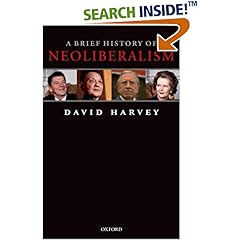
My world has been full of language labs, cat doors, hiking, assessment, fence building and course prep recently and I've neglected to blog about much. Meanwhile, we keep bailing out the upper 6%. The average income of this 6%? Over 30 million dollars per year. On a global scale, 300 or so individuals are worth more as a group than the bottom 2.5 billion (Harvey, A Brief history of neoliberalism). What irks me is that this is an absolutely radical transformation from 40 years ago, yet we act (see Forbes, Bush, Palin, McCain, Norquist, Newt, Armey, John Roberts, Scalia, Goldman Sachs, etc.) as if these folks are under some kind of burden, held back by meddlesome government and jealous commoners. Right.


Anyway, as always, Brad Delong gets it right, channeling Krugman quoting Saez...

More Second Gilded Age Blogging: "

Via Paul Krugman:

Even more gilded: With everything else going on, the latest inequality numbers from Emmanuel Saez, now updated to 2007, didn’t get much attention. But they’re truly amazing:

Even more gilded - Paul Krugman Blog - NYTimes.com.gif

That means that the top 1-10,000 of the American income distribution receives 6% of pretax household income--meaning that their average income is 600 times that of the average.


Time for a more progressive income taz, is what I am saying...


The curious thing is that Emmanuel's office is only 7 doors north down the hall, yet I have to find out about this via a loop to New Jersey...


"

Monday, February 09, 2009

Cheerleader Journalist vs. Analysts: Inane vs. Sane

Here's the picture, via tpm, students: Nouriel Roubini and Nassim Taleb had a 3-hour long line to get into their talk at Davos.  Who was waiting to get in?  Folks like Bill Gates.

Roubini is "famous" now, so CNBC invites him and Tasseb on to the channel.  The problem is that either these journalists are too isolated, stupid or brainwashed to understand what Roubbini and Taleb had to say, or they are selling a product (unlimited growth, DOW 50,000!) that just doesn't exist right now.  They seem to think there is some sector that will give their portfolios a miracle cure, which is silly.  Our problems are systemic.*  It's not just banking or insurance or production or demand.  It's all entangled and until the finance sector clears its bad assets and can clearly put value on real, physical production (as opposed to circulating mathematical-model hedge funds that relate to no real-world products) then the system will not work.  It's really fascinating to watch these clueless people who seem to think that a little cheerleading is going to get everybody through this.  (Oh, and they also think that all bankers are geniuses and deserve high salaries for crashing the system.)


Video link 

*Of course, there will always be some stock somewhere that makes money.  The point is, Roubini and Tasseb are not talking about isolated stocks, but about a whole (screwed up) system.

Wednesday, November 12, 2008

A student sent me this today....


By Marwaan Macan-Markar

BANGKOK - The largest island off west coast is emerging as another frontier for China's expanding plans to extract the rich oil and gas reserves of military-ruled Myanmar.

Initial explorations by a consortium, led by China National Offshore
Oil Company (CNOOC), has left a deep scar on Ramree Island, which is twice the size of Singapore and home to about 400,000 people. ''They have destroyed rice fields and plantations when conducting the seismic surveys and mining the island in search of oil,'' says Jockai Khaing, director of Arakan Oil Watch (AOW), an environmental group of Myanmar people living in exile.

''The local communities have been directly and indirectly affected,'' he said. ''Hundreds of people have been forced to relocate as a result of the drilling conducted near their communities. The locals hate the Chinese; their world has become crazy after the Chinese arrived.''

CNOOC has been pushing ahead with its work since early 2005 with no attempt to consult the local residents and showing little regard to such notions as corporate social responsibility, said Jockai. The Chinese company, which is listed on the New York and the Hong Kong stock exchanges, has ''not conducted the required environmental impact assessments and social impact assessments that are recognized internationally as a must before exploration work begins.''

Saturday, October 25, 2008

The End of Libertarianism

If there is anything we rail against around here, it's the childish libertarianism of our times.  We thus fully support this takedown of all the stupid ideas and their singulary idealistic purveyors:

A source of mild entertainment amid the financial carnage has been watching libertarians scurrying to explain how the global financial crisis is the result of too much government intervention rather than too little. One line of argument casts as villain the Community Reinvestment Act, which prevents banks from "redlining" minority neighborhoods as not creditworthy. Another theory blames Fannie Mae and Freddie Mac for causing the trouble by subsidizing and securitizing mortgages with an implicit government guarantee. An alternative thesis is that past bailouts encouraged investors to behave recklessly in anticipation of a taxpayer rescue.

There are rebuttals to these claims and rejoinders to the rebuttals. But to summarize, the libertarian apologetics fall wildly short of providing any convincing explanation for what went wrong. The argument as a whole is reminiscent of wearying dorm-room debates that took place circa 1989 about whether the fall of the Soviet bloc demonstrated the failure of communism. Academic Marxists were never going to be convinced that anything that happened in the real world could invalidate their belief system. Utopians of the right, libertarians are just as convinced that their ideas have yet to be tried, and that they would work beautifully if we could only just have a do-over of human history. Like all true ideologues, they find a way to interpret mounting evidence of error as proof that they were right all along.
To which the rest of us can only respond, Haven't you people done enough harm already? We have narrowly avoided a global depression and are mercifully pointed toward merely the worst recession in a long while. This is thanks to a global economic meltdown made possible by libertarian ideas. I don't have much patience with the notion that trying to figure out how we got into this mess is somehow unacceptably vicious and pointless—Sarah Palin's view of global warming. As with any failure, inquest is central to improvement. And any competent forensic work has to put the libertarian theory of self-regulating financial markets at the scene of the crime.
[...]
There's enough blame to go around, but this wasn't just a collective failure. Three officials, more than any others, have been responsible for preventing effective regulatory action over a period of years: Alan Greenspan, the oracular former Fed chairman; Phil Gramm, the heartless former chairman of the Senate banking committee; and Christopher Cox, the unapologetic chairman of the Securities and Exchange Commission. Blame Greenspan for making the case that the exploding trade in derivatives was a benign way of hedging against risk. Blame Gramm for making sure derivatives weren't covered by the Commodity Futures Modernization Act, a bill he shepherded through Congress in 2000. Blame Cox for championing Bush's policy of "voluntary" regulation of investment banks at the SEC.  [There's more...]
 I've often found Slate to be a haven for those pseudo-centrist NPR types who are actually quite right-wing, so Jacob Weisberg's piece is a welcome change.

Tuesday, October 21, 2008

The Sky is Falling...

or something like that.

Robert Reich offers one of the most comprehensible explanations out there.

The Meltdown (Part IV)

The Dow is see-sawing but the reality is that the Bailout of All Bailouts isn't working. Credit markets are largely still frozen. Despite all the money going directly to the big banks, despite all the government guarantees and loans and special tax breaks, despite the shot-gun weddings and bank mergers, despite the willingness of the Treasury and the Fed to do almost whatever the banks have asked, the reality is that credit is not flowing. It's not flowing to distressed homeowners. It's not flowing to small businesses. It's not flowing to would-be homeowners with good credit ratings. Students are having a harder time borrowing for their tuition. Auto loans are drying up.

Why? Because the underlying problem isn't a liquidity problem. As I've noted elsewhere, the problem is that lenders and investors don't trust they'll get their money back because no one trusts that the numbers that purport to value securities are anything but wishful thinking. The trouble, in a nutshell, is that the financial entrepreneurship of recent years -- the derivatives, credit default swaps, collateralized debt instruments, and so on -- has undermined all notion of true value.

Many of these fancy instruments became popular over recent years precisely because they circumvented financial regulations, especially rules on banks' capital adequacy. Big banks created all these off-balance-sheet vehicles because they allowed the big banks to carry less capital.

Paulson is recapitalizing the banks -- giving them money directly rather than relying on reverse auctions -- largely because he's come to understand that the banks have taken on so much debt that the reverse auction system he told Congress he would use(designed to place a market value on these fancy-dance instruments) will leave too many banks insolvent.

But pouring money into these banks, expecting they'll turn around and lend to small businesses and Main Streets, is like pouring water into a dry sponge. Nothing will come out of it because Wall Street is so deep in debt that the banks are using the extra money to improve their balance sheets. They're hoarding it because their true balance sheets -- considering the off-balance sheet vehicles they created over the past several years -- are in such rotten shape.

In other words, taxpayers are financing a massive effort to save Wall Street's balance sheets from Wall Street's previous off-balance-sheet excesses. It won't work. It can't work. The entire effort is merely saving the asses of lots of executives and traders who got us into this mess in the first place, and whose asses should not be saved at taxpayer risk and expense.

What to do? Immediately require the Treasury to stop the broad Wall Street recapitalization, and require Wall Street to lend the money directly to Main Street. At the same time, force Wall Street to write down its true balance sheets: Let the executives and traders take the hit. Let their shareholders and even their creditors take the hit for Wall Street's collosal irresponsibility. This is the only true way to restore trust. It's also the only way to save Main Street's small businesses, homeowners, students, and everyone else.

Sunday, October 19, 2008

Casino Unroyal

Keynes:

"When the capital development of a country becomes a by-product of the activities of a casino, the job is likely to be ill-done"

Sunday, August 10, 2008

A Fairly Significant List:

 Here's a nice list of all the films that cross-promoted through snack foods.  Remember, when kids are screaming at you to buy something, it's not their voice that speaking, it's the corporate mind-cloud.

H/t to AS.  Go read the full article here.

The Adventures of Jimmy Neutron: Boy Genius•• (canned pastas and soups,snack chips)
American Idol•• (candy, cookies, toaster pastries)
The Ant Bully•• (QSR children’s meals, non-carbonated beverages)
Avatar•• (QSR children’s meals, fruit snacks)
The Backyardigans•• (fruit snacks, fruit)
Barbie: Fairytopia•• (breakfast cereals, toaster pastries)
Batman•• (canned pastas and soups, fruit snacks)
Blue’s Clues•• (breakfast cereals, fruit snacks, fruit, yogurt)
Care Bears•• (fruit snacks)
Cars ••(QSR children’s meals, fruit snacks, snack bars, breakfast cereals, toaster pastries, frozen waffles, canned pasta, pudding, cookies, snack crackers, popcorn, yogurt, non-carbonated beverages)
Charlie and the Chocolate Factory•• (candy)
Charlotte’s Web•• (QSR children’s meals)
The Cheetah Girls•• (macaroni and cheese)
Chicken Little ••(fruit snacks)
The Chronicles of Narnia•• (QSR children’s meals, breakfast cereals, cereal bars, snack chips, fruit snacks, toaster pastries, packaged salads)
Clifford the Big Red Dog•• (QSR children’s meals, fruit juice, snack crackers, breakfast cereal)
Curious George•• (QSR children’s meals, breakfast cereals, snack cakes, fruit juice, bananas)
Danny Phantom•• (canned pastas and soups, children’s frozen meals, frozen desserts)
Disney Princesses (breakfast cereals, fruit snacks, yogurt, frozen waffles, toaster pastries)
Doogal•• (QSR children’s meals)
Dora the Explorer•• (breakfast cereals, canned pastas and soups, snack crackers, fruit snacks, cookies, fruit, yogurt)
Dragon Booster•• (QSR children’s meals)
El Chavo animated series (cookies)
Elmo•• and other Sesame Street characters (fruits and vegetables)
The Fairly OddParents•• (snack chips, macaroni and cheese, fruit snacks, frozen desserts)
Finding Nemo•• (fruit snacks)
Flushed Away•• (QSR children’s meals, breakfast cereals, snack bars, snack crackers)
Foster’s Home for Imaginary Friends•• (QSR children’s meals)
Go, Diego, Go!•• (fruit snacks, yogurt)
Goosebumps•• (QSR children’s meals)
Happy Feet•• (QSR children’s meals, snack crackers, breakfast cereals, yogurt, fruit snacks, baked goods, carbonated and non-carbonated beverages)
Hello Kitty•• (fruit snacks)
Holly Hobbie and Friends•• (QSR children’s meals)
I Spy•• (QSR children’s meals, fruit juice)
Ice Age 2 ••(QSR children’s meals, yogurt, fruit snacks, cereal bars, breakfast cereals, toaster pastries, frozen waffles, children’s frozen meals, canned pasta, pudding, cookies, snack crackers, popcorn, carbonated and non-carbonated beverages)
King Kong ••(fruit snacks, snack cakes, cookies, carbonated beverages)
Klutz•• (QSR children’s meals)
Lady and the Tramp•• (carbonated beverages, snack cakes)
Leroy & Stitch•• (fruits and vegetables)
The Lion King ••(fruit snacks)
Little Einsteins•• (breakfast cereals)
The Little Mermaid•• (QSR children’s meals, breakfast cereals, candy)
The Littlest Pet Shop•• (QSR children’s meals)
Looney Tunes•• (QSR children’s meals, fruit snacks, fruits and vegetables)
Madagascar•• (fruit snacks)
Mickey Mouse Clubhouse•• (breakfast cereals)
Monster House•• (frozen pizza)
Monsters, Inc. ••(fruit snacks)
My Little Pony•• (fruit snacks)
¡Mucha Lucha!•• (fruit snacks, frozen desserts)
Nanny McPhee•• (food service pizza and burritos served in schools)
Nintendo characters such as Mario and Donkey Kong (QSR children’s meals)
One Tree Hill•• (carbonated beverages)
Open Season•• (QSR children’s meals, breakfast cereals, children’s frozen meals, popcorn)
Over the Hedge•• (QSR children’s meals, yogurt, snack chips, snack cakes, popcorn, carbonated and non-carbonated beverages)
Paz the Penguin•• (fruits and vegetables)
Peanuts•• (QSR children’s meals)
Pirates of the Caribbean•• (QSR children’s meals, candy, frozen waffles, fruit snacks, breakfast cereals, lunch kits, popcorn, non-carbonated beverages, fruits and vegetables)
Polar Express•• (popcorn)
Robots the Movie ••(fruit snacks)
Rudolph the Red-Nosed Reindeer•• (breakfast cereals, snack cakes)
Rugrats•• (fruit snacks)
Scooby-Doo•• (breakfast cereals, snack crackers, macaroni and cheese, fruit snacks, yogurt)
Shrek•• (breakfast cereals, macaroni and cheese, yogurt, fruit snacks, snack crackers, cookies)
Sony PlayStation characters Spyro the Dragon and Crash Bandicoot (popcorn)
Spider-Man ••(QSR children’s meals, breakfast cereals, cereal bars, cookies, pancakes, fruit snacks, snack crackers, snack chips, sliced cheese, macaroni and cheese, frozen desserts, non-carbonated beverages)
SpongeBob SquarePants•• (QSR children’s meals, breakfast cereals, snack crackers, macaroni and cheese, lunch kits, fruit snacks, cookies, yogurt, fruits and vegetables)
Star Wars Episode III•• (fruit snacks)
Strawberry Shortcake•• (QSR children’s meals)
Stuart Little 3•• (QSR children’s meals)
Superman Returns•• (QSR children’s meals, breakfast cereals, milk, cereal bars, snack chips, snack crackers, fruit snacks, packaged pasta, carbonated and non-carbonated beverages)
Surf’s Up•• (popcorn snack)
Teenage Mutant Ninja Turtles•• (fruit snacks, fruit juice)
Trollz•• (QSR children’s meals)
The Wiggles•• (fruit juice)
The Wild•• (QSR children’s meals)
Winnie the Pooh•• (fruit snacks)
Winx•• (fruit snacks, fruit juice)
Xiaolin Showdown•• (breakfast cereals)
Yu-Gi-Oh!•• (QSR children’s meals)
Zoom•• (QSR children’s meals) 

Wednesday, August 06, 2008

Why Ayn Rand Was/Is Wrong...

Dear 18-year-old nerds and Alan Greenspan:

Here's a little article on why excessive individualism (aka, a purely "ownership society") can lead to bad results.  I know it probably won't change your mind.  After all, you say, libertarianism (or conservatism) never fails, people only fail libertarianism.  Well, just think about it, ok?

The Permission Problem, by James Surowiecki: In the second decade of the twentieth century, it was almost impossible to build an airplane in the United States. That was the result of a chaotic legal battle among the dozens of companies—including one owned by Orville Wright—that held patents on the various components that made a plane go. No one could manufacture aircraft without fear of being hauled into court. The First World War got the industry started again, because Congress realized that something needed to be done to get planes in the air. It created a “patent pool,” putting all the aircraft patents under the control of a new association and letting manufacturers license them for a fee. Had Congress not stepped in, we might still be flying around in blimps.
The situation that grounded the U.S. aircraft industry is an example of what the Columbia law professor Michael Heller, in his new book, “The Gridlock Economy,” calls the “anticommons.” We hear a lot about the “tragedy of the commons”: if a valuable asset (a grazing field, say) is held in common, each individual will try to exploit as much of it as possible. Villagers will send all their cows out to graze at the same time, and soon the field will be useless. When there’s no ownership, the pursuit of individual self-interest can make everyone worse off. But Heller shows that having too much ownership creates its own problems. If too many people own individual parts of a valuable asset, it’s easy to end up with gridlock, since any one person can simply veto the use of the asset.
The commons leads to overuse and destruction; the anticommons leads to underuse and waste. ... Even divided land ownership can have unforeseen consequences. Wind power, for instance, could reliably supply up to twenty per cent of America’s energy needs—but only if new transmission lines were built, allowing the efficient movement of power... Don’t count on that happening anytime soon. Most of the land that the grid would pass through is owned by individuals, and nobody wants power lines running through his back yard.
The point isn’t that private property is a bad thing, or that the state should be able to run roughshod over the rights of individual owners. Property rights (including patents) are essential... But property rights need to be limited to be effective. The more we divide common resources like science and culture into small, fenced-off lots, Heller shows, the more difficult we make it for people to do business and to build something new. Innovation, investment, and growth end up being stifled. ...
In theory, one should be able to break a gridlock by striking a deal that would leave all sides better off. Sometimes that happens. ... [But...] One reason deals founder is that there are simply too many interested parties. If, in order to create a new drug, you have to strike bargains with thirty or forty other companies... often things go awry because owners won’t make a deal at a reasonable price...
Recent experimental work by the psychologist Sven Vanneste and the legal scholar Ben Depoorter helps explain why. When something you own is necessary to the success of a venture, even if its contribution is small, you’ll tend to ask for an amount close to the full value of the venture. And since everyone in your position also thinks he deserves a huge sum, the venture quickly becomes unviable. So the next time we start handing out new ownership rights—whether via patents or copyright or privatization schemes—we’d better try to weigh all the good things that won’t happen as a result. Otherwise, we won’t know what we’ve been missing. (h/t: Economist's View)

Saturday, August 02, 2008

BLS

The Bureau of Labor Statistics, as Atrios points out (and as Kevin ... also discussed in Harper's), keeps an array of data of unemployment.  For some reason, which I'll say is probably political expediency,  the "U3," which is basically all those who are out of work AND seeking work, is our official rate.  But the U3 does not count people who have given up after months of trying and who still want to work.  The U6, " Total unemployed, plus all marginally attached workers, plus total employed part time for economic reasons, as a percent of the civilian labor force plus all marginally attached workers.." Has a different and more comprehensive look at unemployment.  Click on the graph to see full size.  You'll note that U3 is 5.7 and U6 is 10.3.


As Kevin Phillips points out, the "truth," or at least a better picture of the various truths that one can glean about an economy, could set us free for some real discussion:


"The corruption has tainted the very measures that most shape public perception of the economy—the monthly Consumer Price Index (CPI), which serves as the chief bellwether of inflation; the quarterly Gross Domestic Product (GDP), which tracks the U.S. economy’s overall growth; and the monthly unemployment figure, which for the general public is perhaps the most vivid indicator of economic health or infirmity. Not only do governments, businesses, and individuals use these yardsticks in their decision-making but minor revisions in the data can mean major changes in household circumstances—inflation measurements help determine interest rates, federal interest payments on the national debt, and cost-of-living increases for wages, pensions, and Social Security benefits. And, of course, our statistics have political consequences too. An administration is helped when it can mouth banalities about price levels being “anchored” as food and energy costs begin to soar.
The truth, though it would not exactly set Americans free, would at least open a window to wider economic and political understanding. Readers should ask themselves how much angrier the electorate might be if the media, over the past five years, had been citing 8 percent unemployment (instead of 5 percent), 5 percent inflation (instead of 2 percent), and average annual growth in the 1 percent range (instead of the 3–4 percent range). We might ponder as well who profits from a low-growth U.S. economy hidden under statistical camouflage. Might it be Washington politicos and affluent elites, anxious to mislead voters, coddle the financial markets, and tamp down expensive cost-of-living increases for wages and pensions?" [Number's Racket, Harpers, May 2008]

Friday, July 25, 2008

"Free Markets"

Joseph Stiglitz sayz:

"Fannie’s and Freddie’s free lunch, by Joseph Stiglitz, Commentary, Financial Times: ...The US government is about to embark on ... a partnership, in which the private sector takes the profits and the public sector bears the risk. The proposed bail-out of Fannie Mae and Freddie Mac entails the socialisation of risk – with all the long-term adverse implications for moral hazard – from an administration supposedly committed to free-market principles.
Defenders of the bail-out argue that these institutions are too big to be allowed to fail. If that is the case, the government had a responsibility to regulate them so that they would not fail. No insurance company would provide fire insurance without demanding adequate sprinklers; none would leave it to “self-regulation”. But that is what we have done with the financial system."
 [h/t economists view]
I heard some "left wing" talk show host yesterday on AM 1150 who kept going on and on about free markets and how if we just let them do their job everything would be ok.  Well, no.  Free markets, as an idea, may be perfect, but the truth is that they are a utopian concept, a shadow on the wall.  Power (as seen above) will always intervene, and, indeed, power structures (lobbyists, politicians, Wall Street) were present in the first place as Fannie Mae was massaged into a corporate model (with benefits for shareholders).  Until we have an open discussion about who is wielding this influence and whether such influence is undue and subject to corruption and failure, then our conversations will also remain in a "utopian" netherworld that fails to account for what is really happening.

Capitalism, the marketplace are incredibly dynamic systems, but they can be a threat to democracy when they become a corporatocracy.  It's funny, someboday was telling me how much China was becoming like us; I looked around and thought: "No, we're becoming like them."

Thursday, April 17, 2008

A Trillion Here, A Trillion There, A Trillion Everywhere

Channeling Brad Delong again for this graph:

Wednesday, April 16, 2008

A Trillion Here, A Trillion There

Brad Delong points to this article at Vox EU referring to the Fed's attempts to control the crisis in the finance industry. I will post some U.S. bugdet numbers for comparison's sake. My point is: if the federal government were to spend a trillion dollars on a military mission to "save our way of life," you better believe we would hear about it. (Ok, maybe not, our media suck.)

Just take a look at this:

[...]

These new programs are very different from the ones that had been in place prior to the crisis.... By changing the level of the monetary base (really commercial bank reserve deposits at the central bank) Fed officials keep the market-determined federal funds rate near their target.... Given the quantity of assets it owns, the Fed can decide whether it wants to hold Treasury securities, foreign exchange reserves, or a variety of other things.... By the end of March 2008, the Fed had committed more than half of their nearly $1 trillion balance sheet to these new programs:

  • $100 billion to the Term Auction Facility,
  • $100 billion to 28-day repo of mortgage-backed securities,
  • $200 billion to the Term Securities Lending Facility,
  • $36 billion to foreign exchange swaps,
  • $29 billion to a loan to support the sale of Bear Stearns,
  • $30 billion so far to the Primary Dealer Credit Facility.

Changes in the composition of central bank assets are intended to influence the relative price a financial assets -- that is, interest rate spreads. So, by changing its lending procedures, Fed officials hoped that they would be able to reduce the cost of 3-month interbank loans and the spread between U.S. agency securities and the equivalent maturity Treasury rate. At this writing, these programs have met with only modest success.

[...]

Now, here are a few budget numbers from 2007 courtesy of Wikipedia:

  • $586.1 billion (+7.0%) - Social Security
  • $548.8 billion (+9.0%) - Defense[2]
  • $394.5 billion (+12.4%) - Medicare
  • $294.0 billion (+2.0%) - Unemployment and welfare
  • $276.4 billion (+2.9%) - Medicaid and other health related
  • $243.7 billion (+13.4%) - Interest on debt
  • $89.9 billion (+1.3%) - Education and training
  • $76.9 billion (+8.1%) - Transportation
  • $72.6 billion (+5.8%) - Veterans' benefits
  • $43.5 billion (+9.2%) - Administration of justice
  • $33.1 billion (+5.7%) - Natural resources and environment
  • $32.5 billion (+15.4%) - Foreign affairs
  • $27.0 billion (+3.7%) - Agriculture
  • $26.8 billion (+28.7%) - Community and regional development
  • $25.0 billion (+4.0%) - Science and technology
  • $23.5 billion (+0.8%) - Energy
  • $20.1 billion (+11.4%) - General government

I don't want to argue the specifics of these numbers (military spending is actually higher than stated here). I'm also not saying that our government should refrain from action, though I think the Bear Stearns bailout was misguided and that homeowners, not hedge funds, should be getting the billions.

My point is that we are going through a national emergency simply by definition of the proportion of our government's emergency spending on a single problem.

But Pennsylvanians are bitter.

Wednesday, March 26, 2008

Tag Cloud Poetry: Fed Reserve Helps Bear Stearns Buyout

motherf****** elite billionaires theft bailout crony capitalism
a**holes bear stearns class billionaires fed buyout collusion
jerks bear stearns profit federal reserve mutual help
employees bear stearns federal reserve collaboration
media public reponsibility fraud
corporatocracy

Tuesday, March 25, 2008

Quote du jour...

Ok, Students. Here's your thought-provoking quote of the day.

[Neoliberal racism] is a racism that works hard to remove issues of power and equity from broader social concerns. Ultimately, it imagines human agency as simply a matter of individualized choices, the only obstacle to effective citizenship and agency being the lack of principled self-help and moral responsibility. [Henry Giroux, The Terror of Neoliberalism 58]
Now, go forth and look for this phenomenon, digging up phrases like "Say 'no' to drugs!" and "Abstinence works!" and "Ownership society" like the weeds they are.

In the not-unrelated category but as a total non-sequitur, here's what I'm thinking:

As the economy worsens and the niceties brought by prosperity disappear, it is likely we will see straight-up power structures gaining ground. That is, as commercial exchange lessens in this environment of willful government non-intervention, as our "ownership" society reverts to bankrupt society without a fiscal or social safety net, relationships of pure power will take over. In the poorest neighborhoods these will be gangs; in the slightly better-to-do, more crime and generally less security will bring more policing.

Friday, March 21, 2008

10 Ways Our Government Does Business that You Shouldn't

10. Secrecy. Somebody once said that secrets “are government's excuse to lie.” All of you in web 2.0 have seen the success of platforms that are open to scrutiny. That's democracy in action, and we know it works. From the arcane and hidden accounting fiascsos of Enron, WorldCom and now Bear Stears, from Dick Cheney's secrecy fetish and his energy roundtables, secrecy's hidden cost is everywhere these last few years. Private citizens deserve privacy; public entities deserve and, I would say, flourish from scrutiny. Put your stuff out there. Did anyone say Diebold?

9. Unclear Mission Statement. “I just want you to know that, when we talk about war, we're really talking about peace.” (George W. Bush). Anything as big as our government will have some inherent contradictions, but, as a business leader, you should be careful to have a single goal and communicate it effectively.

8. Phoney Services. A good example of this is the Walter Reed Scandal. Our government touts its patriotism as awe-inspiring and our president never misses a chance to be photographed with a boy in uniform. Yet, when it comes to taking care of our veteran amputees, our president leaves the room faster than you can say “cut and run.” Lesson: don't advertise big love for your customers when all you are really doing is giving them peanuts. Don't say you are a green company when you invest .005% of your budget in that area...

7. Know your customer. Somewhere near 100% of the U.S. senators are millionaires, and nearly all of them get even richer when they leave government. This leads to a situation known as “being out of touch.” As economists have shown, the rich are getting richer and the poor are getting poorer, and that real wages compared to inflation have been in decline, especially since 1980. This is not a good way to do business and, eventually, it will catch up with you, as it did for congress in 1994 and 2006. Your customers are busy and, because of you, working harder every day, but, eventually they realize that “trickle down” means “piss on.”

6. Use your own product. This is not unrelated to number 7. Once you become a top government official in the house or senate, you will get healthcare—and good healthcare it is—for life. If you are in charge of producing a product (or refusing to produce a product) or regulating such a product's availability, you should live by those laws too. If the version of Windows you run at MS headquarters has magic features that allow it not to crash and bring on the blue screen of death, you should at least give your customers the same version, right? (See number 8)

5. Watch out for hostile takeovers. When a new boss comes in and starts replacing all the key staff members with people you know you shouldn't trust, look out. For example, when Bush puts the lawyer for mine companies in charge of mine safety, or when complete hacks with false resumes get put in charge of FEMA, watch your rear. Before you know it mass displacement (layoffs, firings, forced migration, etc.) will come. Sure, some forseeable "natural" event (a hurricane, a recession, foreign competition) will be the excuse, but--and you knew it all along--this group of bosses actually likes the hurricanes and has lots of friends running that foreign factory...

4. Don't kill your customers (too quickly or at all). This is an interesting one because the government actually does better here than in other areas. Philip Morris has shown that killing your customers slowly can still be a viable business model. The government's food pyramid, drug-approval system and its lack of universal health-care tend to emulate this model. If people die slowly and in ways that are hard to correlate with your product, then you might do quite well. If, however, your product kills quickly, make sure that the public is willing to make the sacrifice. Developing a strong mystique of manliness that is deeply interwined with the national identity is good way to do this. Marlboro man almost worked, but the government actually wins this battle with the second amendment and the military.*

3, 2 and 1. Get rid of unecessary paperwork and bureaucratic nightmares and focus on what you are good at. Now I know this is going to be controversial, but I'm not talking about taxes here, though I think there is a lot of room for improvement there too. I'm talking about cutting the size of the world's largest military. I'm talking about getting out of wars that are not doing us or the world any good. When the need arises, you can still create a large military—that's what happened in all the wars we won—so focus on your strengths. I'm talking about getting rid of health insurance companies that spend 25% of their budget on paperwork and management compared to medicare, which spends less than 10. (That is right, the government is more efficient at delivering healthcare than insurance companies.) So, lesson numbers 3-2-1: Cut out the middlemen and focus on what you are good at and on delivering it efficiently to your customers. The same goes for school vouchers. Why would the government give tax dollars to citizens to then send those dollars to private schools which have the right to refuse those students. Public education works—when you do it right and fund it. Focus on your strengths, such as not doing top 10 lists when you are really good at top 7 or top 8 lists. So, when I say focus on what you are good at, I really mean focus on being good.


*If you do happen to kill customers or if happen to some homicidal costs on your balance sheet, it helps if they are poor and brown and live in places like New Orleans, Baltimore, Iraq and Bhopal. This is immoral and not recommended, but the national media will probably let you get away with it as long as it does not adversely affect their shareholders or put "the system" into question.

Thursday, March 20, 2008

Crashing the System

Students in Global and Cultural Studies beware. The real world might be on your test. What do these things have in common?

ITEM:
Saner voices within the capitalist class, having listened carefully to the warnings of the likes of Paul Volcker that there is a high probability of a serious financial crisis in the next five years, may prevail. But this will mean rolling back some of the privileges and power that have over the last thirty years been accumulating in the upper echelons of the capitalist class. Previous phases of capitalist history-one thinks of 1873 or the 1920s-when a similarly stark choice arose, do not augur well. The upper classes, insisting on the sacrosanct nature of their property rights, preferred to crash the system rather than surrender any of their privileges and power. In so doing they were not oblivious of their own interest, for if they position themselves aright they can, like good bankruptcy lawyers, profit from a collapse while the rest of us are caught most horribly in the deluge. (Harvey, Introduction to Neoliberalism, 152-53)


ITEM:
There are two ways to read last night's sale of Bear Stearns to JPMorganChase for $2 a share:

  1. There were no other bidders. Bear Stearns only other option was to file for bankruptcy this morning. And Bear Stearns's executive were convinced that that was not an option--that not playing along meant that everybody everywhere would look with glee on the filing of every criminal fraud charge against them anyone could think of.
  2. Even with the Federal Reserve offering a put on the worst $30 billion of Bear Stearns assets, there is so much garbage in the closet that $2 a share is a fair price.

The market this morning believes in (2). I tend to believe in (1)--especially as JPMorgan is said to have set aside up to $6 billion to deal with litigation when Bear Stearns's shareholders and others claim they got a raw deal... (Brad Delong)

ITEM:
The nation’s fifth largest investment bank Bear Stearns nearly collapsed last week. It was saved only after the Federal Reserve took extraordinary measures to help JPMorgan purchase the eighty-five-year-old firm. The Fed has become the lender of last resort for other investment banks in a move that marks one of the broadest expansions of the Fed’s lending authority since the 1930s. We speak with Nomi Prins, an author and former investment banker at Bear Stearns, and Max Fraad Wolff, an economist and writer.

[Transcript of interview with Max Brad Wolff]
Well, I mean, I think it’s always tough to know exactly what’s going to happen. The way I like to do this in other lectures or my classes is to make the following point: there’s an epidemiology to this. And the discussion so far reminds me of the AIDS as “GAIDS” discussion, where we pathologize early victims as deviants who get some just punishment and pretend that it’s not a sort of pathogen entering a population where the sickest and most vulnerable fall first.

The sickest and most vulnerable people in the US money game are highly indebted, low-income consumers who tend to get subprime loans. In the journal—the mainstream journalist discussion, it sounds like there’s subprime people, like they’re born subprime in a special incubator with some kind of deformity. In fact, that’s a FICO credit score. And the poorest people get hit first and hardest by every economic disruption, because poverty means vulnerability in a market economy. So what we’ve seen in the beginning of a turndown of a long boom, a boom that really began in the early ’80s, is the weakest and most vulnerable with the most debt and the least income, the subprime crowd, hit—got slammed first, and then it sort of moves to the population, as “GAIDS” becomes AIDS becomes recognized.

And so, we’re—I think we’re in the early innings of this, maybe a third of the way through—half, if we’re lucky. Now, that doesn’t mean that the pain will continue to be so localized in finance. It’s already spilling out into the US macroeconomy. It is already an international phenomenon. And it’s heavily falling into retail. I expect severe difficulties in retail soon, and I expect greater difficulties in housing markets, because, actually, although it gets less press than I think it deserves, already 40-plus percent of delinquencies and default issue notices are moving out of the strict subprime market into what’s called Alt-A, Alt-B, and then prime—so, in other words, people between subprime and prime, and then cascading over into prime. We know this is a problem, because ten percent of all US homeowners are what we call “underwater”—they owe more than their house is worth. That’s a pretty serious amount.

And so, I see increasing bailouts with willy-nilly rewriting of federal legislation, which was done in those meetings. The JPMorgan-Federal Reserve meetings with Bear Stearns, in effect, redid American financial regulatory law, bumping an inactive Cox-led SEC out of the way, asserting Federal Reserve control in places and ways that had not been asserted before, and therefore front-running Congress and the presidency, which has been sitting on its hands, which is a little bit like the Glass-Steagall situation.

But now we have the Federal Reserve coming in to basically take out, not bail out, one firm to support all the other firms, immediately making available to them all kinds of access to cash and support they never got before, which, by the way, would have saved Bear Stearns, and in so doing—blasé, private meeting, no transparency—rewriting American financial legislation, while the President tells crazy fictional stories about Iraq and the Congress does fundraising for its next election, and is a byproduct that will be told later, what legislation to pass. I mean, it’s kind of surreal at this point.(Democracy Now)

Sunday, December 02, 2007

Friday, May 25, 2007

Disturbing News From Wall Street

Disturbing to me anyway. What Happens on Wall Street stays on Wall Street? (Unless you are one of the poor folks harmed by non-transparent financial systems and don't know where to trace it back to...)

From the WSJ:


Goldman Sachs Group Inc. ranks as the most profitable securities firm on Wall Street -- reflecting its mastery of trading on the world's public markets.

Now Goldman is turning that franchise on its head, creating its own private system to trade the stocks of companies that don't want the scrutiny and regulatory burdens of going public.

The new system, GS TRuE -- short for Goldman Sachs Tradable Unregistered Equity -- was announced two weeks ago and made its debut on Monday with an $880 million sale of a 15% stake in Oaktree Capital Management LLC, an alternative-investment manager.

Friday, March 16, 2007

I guess I'm back


I got tired of blogging for a while. But I'm back. In the next few days I'll be "reviewing"/summarizing David Harvey's A Brief History of Neoliberalism. Here's something to get you started:


David Harvey's A Brief History of Neoliberalism makes for compelling reading for those interested in the political economy of the last thirty-odd years. Or should I say thirty odd years.

Of particular interest is not only the historical sweep of the book, or its relative clarity compared to other works by Harvey, but the prism the author gives the reader to understand the present contradictions of globalism comprehensively, from economic, political and, yes, even moral points of view.

The book's foundation stands on Harvey's ability to weave the global aspects of international capital into case studies of countries who have tried neoliberalism (voluntarily or not) to varying degrees, from Britain to Chile, Argentina, Mexico, China and, of course, the U.S. From his analyses, Harvey steps naturally and logically out of history and into an investigation of the current state of neoliberalism and its possible futures. As Harvey points out, citing visionary thinking of Polanyi, neoliberalism, in both philosophy and practice, is fraught with contradictions and ambiguities that lend it strength while undermining its central tenets. In a word, there is much to be afraid of, but there is also space for hope.

Freedom
Understanding neoliberalism requires an introduction to the basic tenets of 'freedom' as laid out by the Mont Pélerin Society shortly after World War II. Led by political philosopher Friederich van Hayek, the society set out to combat what they saw as the primary “dangers” facing the Occident:

The central values of civilization are in danger...even that most precious possession of Western Man, freedom of thought and expression, is threatened by the spread of creeds, which...seek only to establish a position of power in which they can suppress and obliterate all views but their own.
The group holds that these developments have been fostered by the growth of a view of history which denies all absolute moral standards and by the growth of theories which question the desirability of the rule of law. It holds further that they have been fostered by a decline of belief in private property and the competitive market; for with the diffused power and initiative associated with these institutions it is difficult to imagine a society in which freedom may be preserved. (Harvey 20)


Hence, as Harvey points out, freedom bcomes the result of private property and a competitive market. Relying on neoclassical economics and the rational actor, neoliberalism showed a great distrust of certain types of government intervention such as centralized control of the economy as predicated in the Keynsian tradition coming out of the Great Depression and especially in the dirigiste form found in countries like France and Mexico. The founding Neoliberals believed that no government had enough access to economic information to accurately plan an economy and that only the invisible hand of the market could make such decisions.

“The scientific rigor of its neoclassical economics does not,” writes Harvey, “sit well with its political ideas of freedom, nor does its supposed distrust of state power for a strong and if necessary coercive state that will defend the rights of private property, individual liberty and entrepreneurial freedoms” (21). Indeed, the contradictions between personal and entrepreneurial freedom become rapidly apparent as one neoliberal state after another paradoxically increases state power over the individual to ensure freedoms for that other individual, the corporate enterprise. This seems to prove the thinker Polayni uncannily prescient:

Planning and control are being attacked as a denial of freedom. Free enterprise and private ownership are declared to be essentials of freedom. No society built on other foundations is said to deserve to be called free. The freedom that regulation creates is denounced as unfreedom; the justice liberty and welfare it offers are described as a camouflage of slavery. (Harvey 37)


Besides these obvious contradictions, neoliberalism is also blind to power within the system. (Perhaps this is intentional.) Because no market is free from the influence of power, there is a tendency in them to move towards monopolistic or oligopolistic forms of enterprise. While there are some exceptions, this has proven true in almost every mature market, whether it is a question of car manufacturers or, in particular and most dangerously, mass media. Mirroring the establishment of giant enterprises is the revival of a self-reinforcing and growing elite using wealth to increase power and vice versa. The result, as Harvey notes, means that the top 358 fortunes of 1996 equaled the combined wealth of the bottom 2.3 billion, that is, the bottom 45% of the world's population (34-35). In other words, neoliberalism has meant a revival of class power, and this too has implications for freedom, since the voices of many poor and middle-class citizens remain unheard or weakened under the strains of the supposedly democratic neoliberal state.

End of part I. More to follow tomorrow.

An Overview of A Brief History of Neoliberalism Part II

An Overview of A Brief History of Neoliberalism Part III

Monday, November 20, 2006

Private Investment Funds begin

to really gather steam. This is no longer a phenomenon of microclimates. Here's a snippet from Le Monde today.

350 MILLIARDS D'EUROS.

C'est le montant total dont les fonds d'investissement disposent aujourd'hui pour investir dans le monde. En Europe, ils ont collecté 72 milliards d'euros en 2005 auprès de fonds de pension et de grandes fortunes. Depuis quatre ans, ces acteurs sont présents dans une acquisition d'entreprise sur quatre ou cinq.

3 600 SOCIÉTÉS.

C'est le nombre estimé d'entreprises françaises contrôlées par des fonds d'investissement (soit 6 % de l'effectif salarié du privé) en 2004, selon l'Association française des investisseurs en capital (AFIC).

DEUX-TIERS.

C'est ce que pèse la dette dans un rachat avec un montage en "Leverage buy out" (LBO). Les fonds n'apportent qu'un tiers de capital propre.

It's hard to say, but at some point this could put our stock markets into question, at least marginally. Something to watch, like youtube.